What you will learn in this article
What Ko-Shinto (古神道), “ancient Shinto”, is, and why the word has three quite different meanings.
Outside Japan, Ko-Shinto is almost unknown.
Even in Japan, people use the word in different ways.
In this article I will not decide which meaning is “correct”. Instead, I will introduce all three fairly.
Hello, I am Makomo.
Ko-Shinto is the theme I care about most on this blog, and this article is the “table of contents” for a long series.
If you are new to Shinto, you may want to read What Is Shinto? first.
Ko-Shinto, in one sentence
Ko-Shinto is the faith in the kami that existed in Japan before Buddhism and Confucianism arrived, or the effort to find and revive it.
Japanese dictionaries define it as “the Shinto of ancient times, believed to have existed before foreign ideas such as Confucianism and Buddhism came in”.
But the *Britannica International Encyclopaedia* (Japanese edition) adds an interesting note:
Ko-Shinto is, to a large extent, a picture that was drawn by scholars and Shinto thinkers of the Edo period (1603–1868).
“Ancient Shinto”, yet “drawn in the Edo period”.
This is what makes Ko-Shinto both fascinating and difficult.
The three meanings of “Ko-Shinto” (views differ)
1. The ancient faith itself
The most direct meaning is the faith in the kami that existed in Japan before Buddhism arrived in the 6th century.
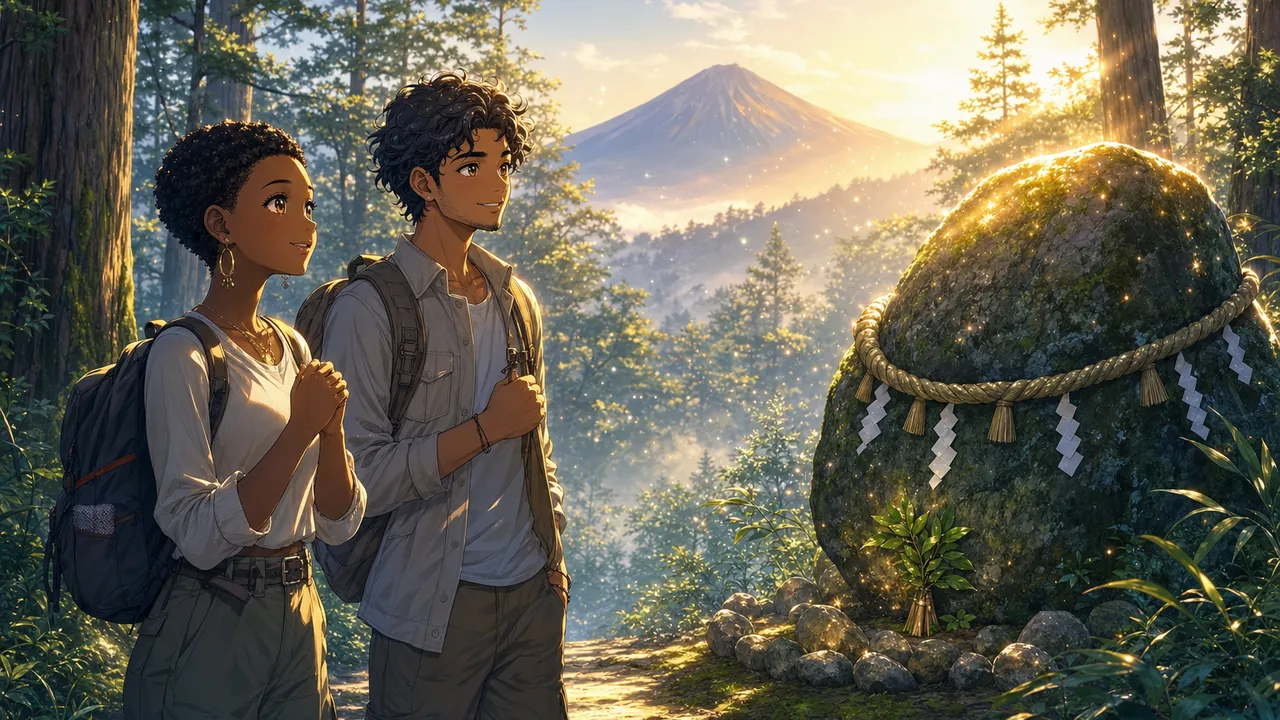
Welcoming kami into mountains, rocks and trees, and holding rites there.
Revering nature and remembering ancestors.
Asking the will of the kami through divination.
The *Britannica* lists nature worship, ancestor worship and divination as its main contents.
Scholars often call this “ancient Shinto” or “primitive Shinto”.
Why it is called that: because it is, quite literally, the Shinto of ancient times.
But since there are almost no written records from that age, we can never know all of it.
2. The “ancient way” sought by Edo-period scholars (Restoration Shinto)
In the 18th and 19th centuries, scholars of Kokugaku (“national learning”), such as Motoori Norinaga (1730–1801) and Hirata Atsutane (1776–1843), read the *Kojiki* and other classics closely, and tried to return to the “ancient way” before Buddhism and Confucianism.
This movement is called Fukko Shinto (Restoration Shinto), and it is also sometimes called Ko-Shinto.
Why it is called that: in their time, Shinto was deeply mixed with Buddhism and Confucianism. These scholars tried to remove what they saw as “foreign” layers and uncover the original way of the kami.
A familiar comparison: this may remind you of movements in many faiths that sought to return to the “original” form: the Protestant Reformation’s call to go back to Scripture alone, Islamic movements calling for a return to the ways of the early Muslim community, or Hindu reform movements that turned back to the Vedas.
3. Spiritual practice movements from the 19th century
Around the Meiji era (1868–1912), Shinto thinkers appeared who tried to experience the relationship with the kami directly, through spiritual practice.
Honda Chikaatsu (1822–1889) taught chinkon (calming and strengthening the soul) and kishin (receiving a kami into one’s body).
In Tosa (today’s Kōchi), the father and son Miyaji Tokiwa and Miyaji Suii were said to travel to the hidden world of divine immortals, and their tradition is known as Miyaji Shinsendō.
Some people and groups in these traditions call their own way “Ko-Shinto”.
Why it is called that: they saw their practices not as something new, but as the recovery of the way of the kami handed down from ancient times. How far back these practices really go is a matter on which views differ.
A familiar comparison: Christian and Jewish mysticism, Sufism in Islam, and yoga and meditation in Hinduism and Buddhism all seek a direct experience of the sacred through practice. Ko-Shinto in this third sense belongs to that kind of path.
How the three connect
| Meaning | Period | Main clues | |
|---|---|---|---|
| 1 | The ancient faith itself | Ancient times | Ruins, classics, folk customs |
| 2 | The “ancient way” of the Kokugaku scholars | Edo period | Study of the *Kojiki* and other classics |
| 3 | Spiritual practice movements | From the Meiji era | Practices and secret teachings |
Roughly speaking, (2) searched for (1), and (3) tried to put (2) into practice.
On this blog, I do not treat any one of these as the “true” Ko-Shinto. All three are important streams.
Clues to the ancient faith
How can we know anything about the faith of meaning (1)?
There are two kinds of clues: things that were written, and things that were left behind.
Things that were written
- *Kojiki* (712) and *Nihon Shoki* (720): the myths of the kami and old forms of rites
- *Kogo Shūi* (807): written by Inbe no Hironari of the Inbe clan, who served in the court rites, to record old traditions left out of the chronicles
- *Fudoki* (8th century): local records of the kami and legends of each province
- Norito in the *Engi-shiki* (927): ancient prayers offered to the kami
- *Man’yōshū* (8th century): poems that show people’s prayers and the idea of *kotodama*
But all of these were written after Buddhism arrived.
How to read the older layers inside them was the great question of the Kokugaku scholars.
Things that were left behind
- Okinoshima (Fukuoka): an island in the sea between Japan and Korea, where rites for safe sea travel were held from the late 4th to the late 9th century. All of the roughly 80,000 objects found there are National Treasures, and the island is called the “Shōsōin of the Sea”. Strict rules are still kept today: not even a single leaf or stone may be taken away, and visitors must purify themselves in the sea before landing. It became a UNESCO World Heritage Site in 2017.
- Mount Miwa (Nara): Ōmiwa Shrine still has no main sanctuary building and worships the mountain itself. Traces of ancient rites have been found at the foot of the mountain.
Rites held toward rocks and mountains, with no buildings at all.
Here we can glimpse the ancient faith.
A familiar comparison: a holy island with strict rules about entering may remind you of Mount Athos in Greece, an Orthodox monastic peninsula where entry is strictly controlled, or of the sanctity of the Temple Mount in Jerusalem, where Jewish law long limited who could enter and how.
Key ideas in Ko-Shinto
Here are some ideas that often come up when people talk about Ko-Shinto.
I will explore each of them in its own article later.
- Musubi (産霊): the power that brings things into being and ties them together. It is part of the names of two of the first kami in the *Kojiki*, Takamimusuhi and Kamimusuhi.
- Kotodama (言霊): the spiritual power that dwells in words. A poem in the *Man’yōshū* praises Japan as “a land where the spirit of words brings blessings”.
- Chinkon (鎮魂): calming and strengthening the soul. The imperial court has held a Chinkon rite since ancient times.
- Misogi-harae (禊祓): purification by water and rites. It is said to begin with the god Izanagi bathing in a river.
- Ichirei shikon (一霊四魂): the idea that a soul is made of one spirit and four souls: the rough, the gentle, the blessing and the wondrous.
- Kakuriyo and utsushiyo (幽世と顕世): the hidden world of the kami and the visible world we live in. In the *Nihon Shoki*, the god Ōkuninushi hands over rule of the visible world and takes charge of the hidden one.
Similar ideas in other faiths
- Kotodama may remind you of the opening of the Gospel of John, “In the beginning was the Word”, of the Jewish tradition that the world was created through divine speech, of the Islamic reverence for the recited words of the Qur’an, or of the Hindu and Buddhist mantra.
- Musubi, a creative power that brings life and connection, has echoes in the Hindu idea of shakti, the creative energy of the divine.
- Kakuriyo and utsushiyo may feel similar to “the seen and the unseen” in Christianity (2 Corinthians 4:18) and to *al-ghayb*, “the unseen”, in the Qur’an. But in Ko-Shinto the hidden world is very close to ours, and the two are deeply intertwined.
The streams of Ko-Shinto (series contents)
Here are the streams of Shinto that matter most for understanding Ko-Shinto, in historical order.
Not all of them are called “Ko-Shinto”, but all are deeply tied to its history.
I plan to write about each one.
| Period | Stream | In short |
|---|---|---|
| Kamakura (13th–14th c.) | Ise Shinto | Teachings developed by the Watarai priests of the Outer Shrine of Ise, which tried to make Shinto independent of Buddhism |
| Muromachi (15th c.) | Yoshida Shinto | The “One and Only Shinto” of Yoshida Kanetomo (1435–1511), which shaped shrines across Japan for centuries |
| Heian to Edo | Hakke Shinto | The tradition of the Shirakawa family, who served for generations as head of the court office of kami rites |
| Edo (18th–19th c.) | Restoration Shinto | The search for the “ancient way” by Motoori Norinaga and Hirata Atsutane (meaning 2) |
| Meiji | Honda’s spiritual studies | Honda Chikaatsu’s chinkon and kishin (meaning 3) |
| Meiji | Miyaji Shinsendō | The way of divine immortals begun by Miyaji Tokiwa and Suii (meaning 3) |
| — | Yamakage Shinto | A tradition said to go back to Fujiwara no Yamakage of the Heian period |
Yoshida Shinto is usually classed as a medieval Shinto teaching and is rarely called Ko-Shinto itself.
But because it shaped later Shinto so strongly, it cannot be left out.
For traditions that continue today, I will write based on history and public sources, without praising, criticizing or promoting any group.
Koshi Koden: the “other” ancient histories
When Ko-Shinto comes up, so do the Koshi Koden (古史古伝), “ancient histories and ancient legends”.
This is a name for texts that claim to record an ancient history different from the *Kojiki* and *Nihon Shoki*.
The name is said to have been used first by the researcher Agō Kiyohiko, in books such as *Kojiki izen no sho* (“Writings before the Kojiki”, 1972).
Well-known examples include:
- Hotsuma Tsutae: a long poem in a unique script called *woshite*, written in lines of five and seven syllables
- Takeuchi Documents: texts made public in the early Shōwa era (around 1930) that tell a vast “super-ancient” history
- Kukami Documents: said to be handed down in the Kukami family, giving great weight to the kami of Izumo
- Uetsufumi: said to have been handed down in Bungo (today’s Ōita), written in “divine age scripts”
- Miyashita Documents: handed down in the Miyashita family at the foot of Mount Fuji, telling of an ancient dynasty near the mountain
All of them are said to be older than the *Kojiki*.
However, most scholars regard them as works written much later, from the Edo period onward.
Even so, they contain names of kami and views of the world that do not appear in the official chronicles.
Asking “when, by whom, and why were they written?” is a fascinating question in itself.
On this blog, I plan to explore each of these texts, compare them, and even form hypotheses from their texts.
When I do, I will always write “the text says…” or “there is a theory that…”, and keep them clearly separate from established history.
A familiar comparison: many traditions have texts outside the official canon. Christianity has the apocrypha and the “lost gospels”, Judaism has writings outside the Hebrew Bible such as the Book of Enoch, and Hinduism has many later Puranas. They are not accepted as official scripture, yet they are rich sources for understanding how people imagined the sacred.
A Ko-Shinto way of seeing it
When you study Ko-Shinto, you keep running into the same question:
how “ancient” is “ancient”?
Almost all the texts we have were written after Buddhism arrived.
The Kokugaku scholars and the spiritual practitioners of the Meiji era each tried to draw their own picture of the “ancient way” from those limited clues.
So Ko-Shinto may be less a single, finished teaching, and more the history of people who kept asking, “What was the ancient way of the kami?”
Makomo’s Thoughts
These are my own thoughts, Makomo’s.
Studying the word “Ko-Shinto”, I felt as if I were looking for old photos of a house.
There are no photos from when it was first built.
All that remains are photos taken after many extensions, and the stories of people who knew it long ago.
Still, from the marks of the pillars and the line of the foundation stones, you can imagine the original floor plan.
Meaning (1), the ancient faith, is that “original house”.
The Kokugaku scholars of meaning (2) tried to redraw the floor plan from old “photos”, the ancient texts.
The practitioners of meaning (3) tried to actually live in the house they had drawn.
And the Koshi Koden are… a rather mysterious album that appeared, saying, “We have even older photos.”
Deciding which one is right is very hard.
But knowing what each of them cherished as they searched for the “ancient way” can give us hints about how we ourselves face the sacred.
For my part, I want to follow that journey slowly, one step at a time.
Ko-Shinto in fiction
I have not yet been able to confirm, from official information, works that take Ko-Shinto itself as their subject.
I will introduce related works in the articles on each stream and each Koshi Koden text.
Summary
- Ko-Shinto means the faith in the kami before Buddhism and Confucianism, or the search for it.
- The word has three meanings: (1) the ancient faith itself, (2) the Restoration Shinto of the Edo period, and (3) spiritual practice movements from the Meiji era.
- Clues to the ancient faith include the *Kojiki*, *Nihon Shoki*, *Kogo Shūi*, *Fudoki*, norito prayers and *Man’yōshū*, and sites such as Okinoshima and Mount Miwa.
- Key ideas include musubi, kotodama, chinkon, misogi-harae, ichirei shikon, and the hidden and visible worlds.
- I will explore Ise, Yoshida, Hakke, Restoration, Honda, Miyaji and Yamakage Shinto one by one.
- The Koshi Koden claim to record a different ancient history, but most scholars regard them as later works.
Ko-Shinto is the history of people who kept asking what the ancient way of the kami was.
I hope you will join me on that journey.
For readers of Japanese, the Japanese version of this article is here: 古神道とは?
FAQ
Q. What is the difference between Shinto and Ko-Shinto?
A. Shinto is the whole faith in the kami in Japan, including today’s shrine rites. Ko-Shinto refers to its ancient form before Buddhism and Confucianism, or the effort to find it.
Q. Is Ko-Shinto still practiced?
A. Some people and groups in the spiritual traditions that began around the Meiji era call their path Ko-Shinto and practice it today.
Q. Are the Koshi Koden real history?
A. They claim to be older than the *Kojiki*, but most scholars regard them as works written much later. On this blog, I introduce what they say as “the text says…”.
Q. Where should I start if I want to learn about Ko-Shinto?
A. Start with the myths of the *Kojiki* and *Nihon Shoki*. English translations are available, and this blog will keep introducing the kami and ideas step by step.
This article is based on the Japanese classics such as the *Kojiki* and *Nihon Shoki*, and on materials available online, with Makomo’s own thoughts added. My own interpretations are kept separate in the section “Makomo’s Thoughts”.
コメント